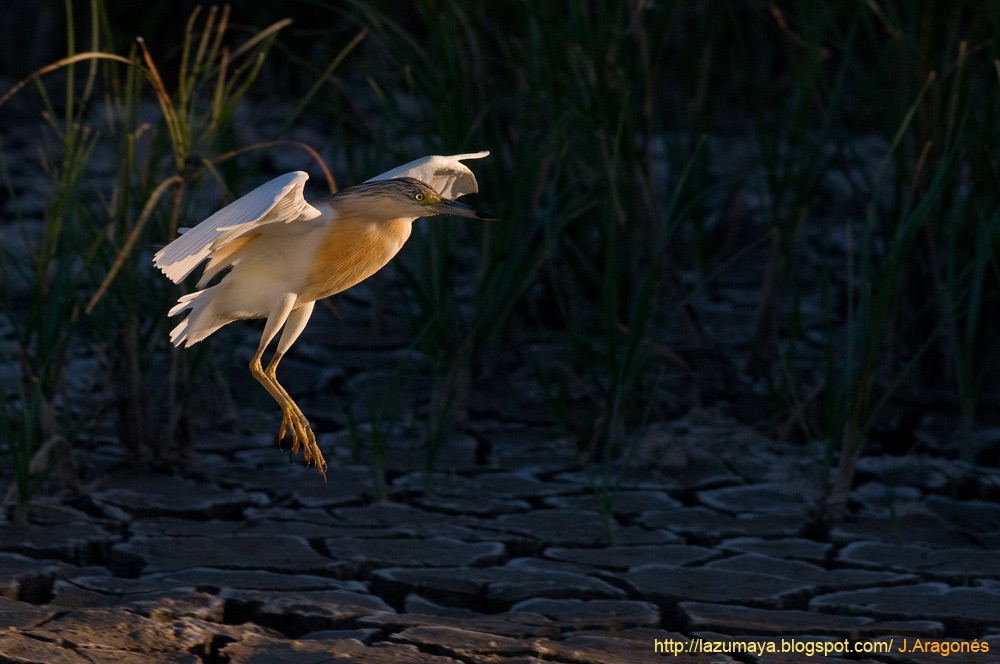
La garcilla cangrejera es una de las ardéidas más espectaculares que hay en el mundo y, en mi opinión, la más bonita de las especies ibéricas. Cuando cambian su discreto plumaje invernal por la librea nupcial parecen una especie distinta. Suaves tonos crema mezclados con blanco límpido y unas largas plumas bñanquinegras que adornan su nuca. Durante los días en los que las hormonas inundan su torrente sanguíneo, las ardeidas lucen además un espectacular cambio de color en en las zonas desnudas: patas, cara, pico y ojos. En el caso de las cangrejeras, la cara se vuelve verde intenso, el pico azul turquesa y las patas se enrojecen muchísimo.
Mostrando entradas con la etiqueta garcilla cangrejera. Mostrar todas las entradas
sábado, 9 de abril de 2011
Cangrejeras
La garcilla cangrejera es una de las ardéidas más espectaculares que hay en el mundo y, en mi opinión, la más bonita de las especies ibéricas. Cuando cambian su discreto plumaje invernal por la librea nupcial parecen una especie distinta. Suaves tonos crema mezclados con blanco límpido y unas largas plumas bñanquinegras que adornan su nuca. Durante los días en los que las hormonas inundan su torrente sanguíneo, las ardeidas lucen además un espectacular cambio de color en en las zonas desnudas: patas, cara, pico y ojos. En el caso de las cangrejeras, la cara se vuelve verde intenso, el pico azul turquesa y las patas se enrojecen muchísimo.
Etiquetas:
ardeola ralloides,
fotografía,
garcilla cangrejera,
Nikkor 500VR,
photography,
squacco heron
domingo, 12 de septiembre de 2010
Tarde de ardeidas a 800ISO

Nikon D300, AFS Nikkor 500VR+1,4XTC, a pulso, exposición manual, ISO640, f7 1/1000s, 7MP
Brazo del Este, en el entorno del Parque Nacional de Doñana, es un sitio que raras veces me defrauda y el viernes, a pesar de que la cosa no pintaba bien al principio. Mi intención era fotografiar tejedores cabecinegros y euplectes pero ninguna de las dos especies dió facilidades. En cambio, en apenas media hora, tranquilamente a la sombra de un sauce me puse las botas con las ardéidas. Martinetes y cangrejeras se dejaron fotografiar a placer, incluso con el 500 a pelo pasaban demasiado cerca para pillarlas enteras. Hoy os muestro unos martinetes y unas cangrejeras. En la próxima entrada dejaré caer unas bueyeras.
Por cierto, cada vez me gusta más tirar a 800ISO porque los resultados son muy buenos siempre que no subexpongas. Gracias por vuestras visitas y por vuestros comentarios :-)
domingo, 18 de julio de 2010
Vacaciones / Holidays

Al fin... llegaron las vacaciones :-) Estaremos viajando desde la costa atlántica de Portugal hasta la costa este de España. Una buena cantidad de kilómetros conduciendo, familia y algo de tiempo para fotografiar. Tendré poco acceso a internet así que este es mi último post de julio. Doñana ya se está secando y la estación reproductora de las aves llega a su fin. Las aves se concentran en las últimas zonas que tienen agua y muy pronto casi no habrá indicios de agua o vida. Garcilla cangrejera posándose en el lecho seco de una charca, en las últimas luces del día. Buenas vacaciones ;-)
At last... time to enjoy our summer holidays has come :-) We will be traveling in Portugal and Spain, from the atlantic coast in Portugal to the mediterranean coast in the east of Spain. A good amount of kilometers driving by car with the family and I hope to find some time to devote to bird photography. I will have very limited access to internet until we are back in home in the middle of august so this one is gonna be my last post in july. Water levels are really low in Doñana right now and birds are concentrated in the very few places that retains some water. Breeding season is almost finished and very soon there will be almost no signs of water or life. Squacco heron landing on a dry pond in the last light of the day Nice holydays to everyone ;-)
Etiquetas:
ardeola ralloides,
Doñana,
fotografía,
garcilla cangrejera,
photography,
squacco heron
lunes, 10 de mayo de 2010
Cangrejeras


Nikon D300, AFS Nikkor 500VR+1,4XTC, a pulso, exposición manual
Hoy le toca el turno a la que probablemente es la garza más bonita de la Peninsula Ibérica o al menos a mí me lo parece así. Estas imágenes son de la otra tarde en el Muro de la FAO, en Doñana. Me puse las botas haciendo vuelos de morito, cengrejera, garza imperial y fumarel. Algún porrón también cayó ;-)
El viento soplaba en la dirección adecuada, es decir, a favor de la luz del sol que comenzaba a ponerse y cuando las aves intentaban volar contra el viento les costaba bastante esfuerzo por lo que me dieron muchas facilidades para acertarles en vuelo. Esa tarde experimenté algo que nunca antes había percibido y es que cuando el hay un poco de viento es realmente difícil sujetar el 500 a pulso ya que ofrece mucha resistencia al aire y hay que hacer bastante esfurzo con los brazos para contrarestar su fuerza.
Una tarde espléndida en compañía de varios amigos que, a pie del coche disfrutamos a reventar de la luz, las aves, las bromas y la fotografía. ;-)
El viento soplaba en la dirección adecuada, es decir, a favor de la luz del sol que comenzaba a ponerse y cuando las aves intentaban volar contra el viento les costaba bastante esfuerzo por lo que me dieron muchas facilidades para acertarles en vuelo. Esa tarde experimenté algo que nunca antes había percibido y es que cuando el hay un poco de viento es realmente difícil sujetar el 500 a pulso ya que ofrece mucha resistencia al aire y hay que hacer bastante esfurzo con los brazos para contrarestar su fuerza.
Una tarde espléndida en compañía de varios amigos que, a pie del coche disfrutamos a reventar de la luz, las aves, las bromas y la fotografía. ;-)
Etiquetas:
ardeola ralloides,
Doñana,
fotografía,
garcilla cangrejera,
photography,
squacco heron
miércoles, 17 de marzo de 2010
The Power of RAW
Justo ahora estaba escuchando una vieja canción de los años 80, de Frankie Goes to Hollywood. "The Power of Love" y me ha inspirado para darle título a la entrada que estaba preparando ;-)
En mi última entrada escribí algunas ideas sobre como uso la sobreexposición para optimizar el procesado digital. Normalmente suelo sobreexponer entre +0,3 y +1EV, a veces incluso más, porque puedo obtener un mejor resultado durante el procesado de los niveles intermedios y las zonas oscuras de la imagen, aparte de que tengo menos problemas de ruido en ISO alta. Pero a veces me paso de la raya y obtengo un aimagen que es demasiado brillante (o incluso muy quemada). Esta fotografía de una cangrejera es un buen ejemplo de ello. El RAW está claramente sobreexpuesto (zonas rojas en el plumaje blanco de la garcilla), más de un punto y medio porque fallé la exposición (estaba esperando fotografiar a otra ave con condiciones de iluminación muy diferentes). Bueno, estaba intentando sobreexponer pero no tanto!
Por suerte, estaba usando RAW y pude solucionar el problema en un periquete durante la conversión de RAW. Añadí-1,65 de subexposición y... un montón de detalle en los blancos, sin zonas quemadas ni ruido digital (estaba usando ISO640 porque quería sobreexponer).
Uf, es increible lo que se puede hacer con un RAW y éste es uno de los ejemplos más sencillos que se pueden contar... otro día pondré algún ejemplo más extremo ;-)
Espero que os resulte interesante y sentiros libres de comentar o preguntar lo que queráis
Right now I am listening in the radio an old song from the 80´s. "The Power of Love" by Frankie Goes to Hollywood and I decided to use the title of that song for today´s entry in my blog.
In my past entry I talked about overexposure in digital and how I use overexposure for a better performance of my processing job (oops, the blog entry is written in spanish but I promise to translate it very soon). Usually, I try to overexpose my images between +0,3 and +1EV, sometimes even more, because I can do a better job in processing the midle tones and tha dark areas in images with a high dinamy range while avoiding the effects of digital noise. But sometimes I go a bit far overexposing and I end with a very bright image. This image of a squacco heron is a good example of what I am talking about. The RAW is clearly overexposed (all the red areas in the bird), more than one and a half stop because I failed the exposure because I was waiting for another bird in a place with different light conditions). Yes, I was trying to overexpose but not so much!
Fortunately I was shooting RAW and there was no problem to fix the image during the RAW conversion. I moved the exposure slider to -1,65 and the RAW conversion made its magic. Plenty of details in the white areas of the bird. No hot areas or white´s clipping and no problem of noise instead of the fact that I was using ISO 640 (do not forget that, instead of the fact that there was plenty of light, I was trying to overexpose and that is the reason for such a high ISO). It is amazing the things that you can do with a RAW and this is just but a very simple example... I will try to show a more extreme example in a coming entry ;-)
Your coments and questions are highly apreciated
In my past entry I talked about overexposure in digital and how I use overexposure for a better performance of my processing job (oops, the blog entry is written in spanish but I promise to translate it very soon). Usually, I try to overexpose my images between +0,3 and +1EV, sometimes even more, because I can do a better job in processing the midle tones and tha dark areas in images with a high dinamy range while avoiding the effects of digital noise. But sometimes I go a bit far overexposing and I end with a very bright image. This image of a squacco heron is a good example of what I am talking about. The RAW is clearly overexposed (all the red areas in the bird), more than one and a half stop because I failed the exposure because I was waiting for another bird in a place with different light conditions). Yes, I was trying to overexpose but not so much!
Fortunately I was shooting RAW and there was no problem to fix the image during the RAW conversion. I moved the exposure slider to -1,65 and the RAW conversion made its magic. Plenty of details in the white areas of the bird. No hot areas or white´s clipping and no problem of noise instead of the fact that I was using ISO 640 (do not forget that, instead of the fact that there was plenty of light, I was trying to overexpose and that is the reason for such a high ISO). It is amazing the things that you can do with a RAW and this is just but a very simple example... I will try to show a more extreme example in a coming entry ;-)
Your coments and questions are highly apreciated
domingo, 26 de julio de 2009
Plumas y luz / Feathers and light


Ayer pasé unas horas fotografiando y pajareando en Brazo del Este (Sevilla). Un montón de aves pero pocas ocasiones fotográficas a pesar de que había una luz realmente buena. Por suerte, me traje un puñado de fotos que me gustan de cigüeñuela, cangrejera y... libelulas. Sí, ya se que no son pájaros, pero de vez en cuando también hago fotos de cosas que no son aves.... :-) Ni que decir tiene que me encanta la imagen de la garcilla cangrejera (Ardeola ralloides) sin cabeza porque la luz es simplemente fantástica ;-)
Yesterday I spent the evening in Brazo del Este (Sevilla) birding and photographing during a couple of hours. A lot of birds but very few real oportunities for photography. Too bad, because the light was relly nice. Fortunatelly I returned home with a bunch od keepers of stilt, squaccos and dragonflies... yes, I know that they are not birds but, from time to time, I do some non-birds photography too... :-) Needless to say that I love the image of the squacco heron (Ardeola ralloides) with no head because the light is just amazing ;-)
Etiquetas:
ardeola ralloides,
fotografía,
garcilla cangrejera,
photography,
squacco heron
martes, 5 de mayo de 2009
Vuelos/Flights
Nikon D2X AFS Nikkor 300VR+1,4XTC, modo HSC (6Mp), a pulso desde el coche, f4,5, 1/2500s ISO400, exposición manualLos vuelos son, sin lugar a dudas, el tipo de fotografías que mas me gusta hacer. Son divertidos, están llenos de acción y, en la mayoría de los casos, son imprevisibles. Una buena fotografía de vuelo exige que el sujeto principal ocupe una buena parte del encuadre para poder disfrutar de los detalles de la acción, las texturas del plumaje y todos esos detalles que a simple vista se escapan a nuestros ojos. A diferencia de la fotografía realizada con sujetos estáticos uno no ve los resultados a través del visor de la cámara sino que se dispara casi instintivamente para descubrir los resultados a posteriori. No hay sitio para errores o segundas oportunidades pero es muy divertido.
Esta gacilla cangrejera (Ardeola ralloides) y la garceta común (Egretta garzetta) son del mismo día. En Doñana, ambas en plumaje nupcial (como se aprecia en las plumas, en el color de la cara y las patas). De todas las especies que conozco, la cangrejera es la más difícil de exponer en vuelo porque cuando abre las alas, tremendamente blancas, el expsímetro se vuelve loco. Incluso en manual es difícil y hay que realizar una compensación negativa de la exposición para salvar los blancos. Esto significa que el fondo tiende a salir demasiado oscuro por lo que lo mejor es hacerlas cuando el cielo está ligeramente cubierto. No sé porqué pero las garcetas, a pesar de ser completamente blancas, son muchísimo más fáciles de exponer.
The photography of birds in flight is my favorite kind of photography. Flights are funny to do, full of action and, in most of the cases, are totally unpredictables. A good flight photography needs to have the main subject filling most part of the frame to enjoy of the plumage textures, the action and of all the details that are unvisible to the naked eye. The photography of static subjects allow the photographer to see all those details throug the viewfinder but if you are shooting flights, the action is so fast that the only way to perceive those details is looking to the camera screen once the action has finished. No room for mistakes or no second chances but it is a lot of fun.
This squacco heron (Ardeola ralloides) and this common egrett (Egretta garzetta) are both from the same day, in Doñana National Park. Both species are in full breeding attire (look at feathers and at the fantastic colors in the bare parts). The egret is white and most part of the squacco´s plumage is white too. The squacco is, by far, the most difficult species to get with and optimal exposure in flight. Well, at least, it is for me. Lots of underxposure and manual, of course. If the light is a bit intense, the best that you can have is a good exposure in the bird but a very dark background. Best results are obtained whith a very slight overcast sky. Egrets are much more easy to expose for me.
Esta gacilla cangrejera (Ardeola ralloides) y la garceta común (Egretta garzetta) son del mismo día. En Doñana, ambas en plumaje nupcial (como se aprecia en las plumas, en el color de la cara y las patas). De todas las especies que conozco, la cangrejera es la más difícil de exponer en vuelo porque cuando abre las alas, tremendamente blancas, el expsímetro se vuelve loco. Incluso en manual es difícil y hay que realizar una compensación negativa de la exposición para salvar los blancos. Esto significa que el fondo tiende a salir demasiado oscuro por lo que lo mejor es hacerlas cuando el cielo está ligeramente cubierto. No sé porqué pero las garcetas, a pesar de ser completamente blancas, son muchísimo más fáciles de exponer.
The photography of birds in flight is my favorite kind of photography. Flights are funny to do, full of action and, in most of the cases, are totally unpredictables. A good flight photography needs to have the main subject filling most part of the frame to enjoy of the plumage textures, the action and of all the details that are unvisible to the naked eye. The photography of static subjects allow the photographer to see all those details throug the viewfinder but if you are shooting flights, the action is so fast that the only way to perceive those details is looking to the camera screen once the action has finished. No room for mistakes or no second chances but it is a lot of fun.
This squacco heron (Ardeola ralloides) and this common egrett (Egretta garzetta) are both from the same day, in Doñana National Park. Both species are in full breeding attire (look at feathers and at the fantastic colors in the bare parts). The egret is white and most part of the squacco´s plumage is white too. The squacco is, by far, the most difficult species to get with and optimal exposure in flight. Well, at least, it is for me. Lots of underxposure and manual, of course. If the light is a bit intense, the best that you can have is a good exposure in the bird but a very dark background. Best results are obtained whith a very slight overcast sky. Egrets are much more easy to expose for me.
Etiquetas:
ardeola,
egrett,
egretta,
flights,
fotografía,
garceta comun,
garcilla cangrejera,
photography,
squacco heron,
vuelos
Suscribirse a:
Entradas (Atom)